
Açaí has moved from a regional fruit system into a structured global ingredient category. Its presence now extends across frozen supply chains, food service operations, and packaged consumer formats. Within this system, the açaí base appears as a central product form. It does not function as a finished item. It remains an intermediate layer within a larger preparation process.
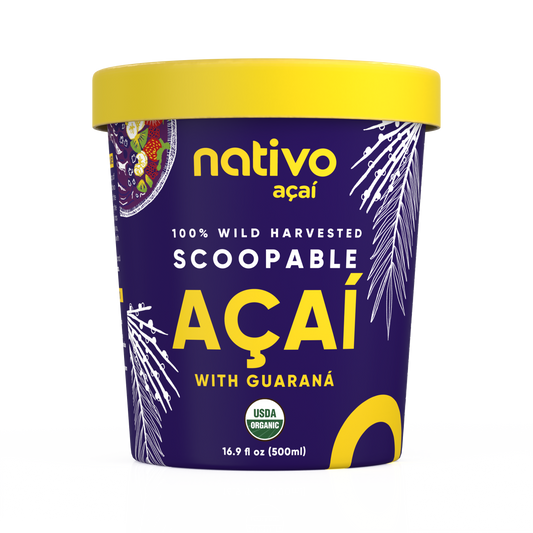
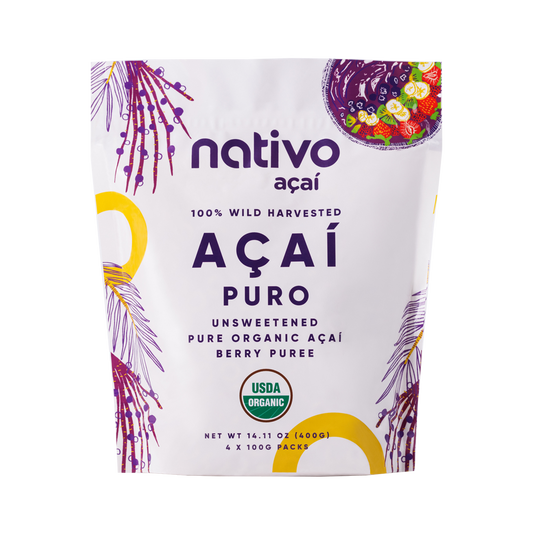
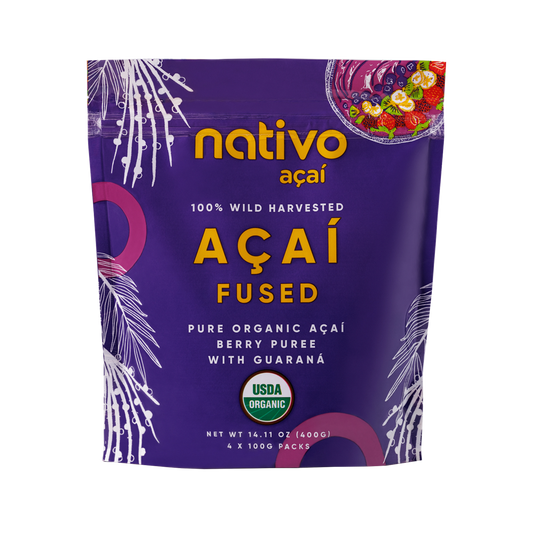
Across this category, two distinct product directions appear. One includes sweetened blends that arrive closer to the consumption stage. The other remains unsweetened, holding a composition that reflects the original pulp. Products such as Nativo Puro Açaí operate within this second structure. Their presence reflects a pattern where processing remains limited and formulation shifts to later stages.
What Is Açaí Base
An açaí base appears as a prepared form of the fruit designed for blending and assembly. It is typically produced as frozen pulp or puree. The product remains dense and semi-solid under controlled temperature conditions.
This format allows the base to move through distribution systems without rapid degradation. It also supports consistent portioning across different use environments. In commercial settings, the base operates as a starting layer. Additional ingredients enter later, depending on the intended application.
The base itself does not determine the final product. It remains adaptable.
What Is Açaí Base Made Of
The composition of açaí base depends on the level of intervention applied after pulp extraction. In unsweetened formats, the structure remains limited.
Typical composition includes:
-
Açaí pulp
-
Water introduced during processing
This combination creates a concentrated mixture with a dense texture. In some cases, stabilizing elements are present in small quantities, though not consistently.
Sweetened bases follow a different structure. They often include:
-
Added sugars or syrups
-
Guaraná extracts
-
Flavoring components
This difference creates two separate product behaviors. One remains neutral and open. The other appears pre-adjusted.
What Makes Unsweetened Açaí Base Different from Flavored Blends
The difference between unsweetened and flavored blends is based on the division of power in the preparation process. Unsweetened blends are still in an open state. Flavored blends have already been standardized.
In unsweetened products such as Nativo Puro Açaí, the product is still in its original state due to the lack of added sweetness. The final product is based on the added ingredients. The original state is just a structural element.
In flavored blends, the situation is entirely different. The composition is already standardized with additional elements for taste. This ensures standardization but compromises the product’s flexibility.
Both types still exist in separate preparation systems.
Why Unsweetened Açaí Base Remains Closer to Raw Fruit Composition
The number of processes that occur after extraction also determines the product's similarity to the source. For the unsweetened açaí base, the number of processes is low after extraction. The fruit is picked and then pulped and frozen. The seeds are removed, and the result is a concentrated fruit. Since no sweetener or flavor enhancer is added, the product resembles the source fruit. This condition determines the product's behavior in blending. Flavor does not dominate blends. It does not dominate unless the concentration is raised.
Ingredient Transparency in Puro Açaí Base Products
The structure of açaí ingredient bases differs from one product to another. Unsweetened bases have a limited composition.
For example, Nativo Puro Açaí is a product that follows this trend. The ingredient list is limited and straightforward.
This is a formulation strategy where inputs are omitted in the production process. Sweetened bases have a long list of ingredients. This list may include various sweeteners and flavor enhancers. This is evident in the final product.
This trend is a manifestation of broader shifts in ingredient transparency in food systems.
Açaí Base Recipe Structure in Industry Settings
Açaí base recipes follow recurring patterns across different preparation environments. The structure remains stable even as ingredient choices vary.
Typical formulation includes:
-
Frozen açaí base
-
Liquid component
-
Secondary fruits
It is mixed into a thick consistency. The final result is semi-frozen, used as the base for bowls or drinks.
For unsweetened versions, the role of the secondary ingredients is more pronounced, as they add sweetness and variety. The base remains the same.
Simple Açaí Base Recipe Patterns Using Frozen Pulp
Preparation methods for the açaí base still follow mechanical processes. Transformation is not done using heat.
Observed pattern includes:
- Frozen Nativo Puro Açaí, which is considered the base component
- Fruits such as banana
- Liquid components, which could be coconut water or coconut milk
-
Ice, which is used to regulate density
The created mixture is dense. While there is a presence of açaí, it is not dominant.
How to Make Açaí Base Using Frozen Pulp
The preparation process reflects blending rather than alteration. The base retains its original properties.
Observed structure:
-
Frozen pulp is partially thawed
-
Liquid is introduced
-
Blending continues until uniform
The result remains thick and cold. Its consistency supports both bowl and beverage systems.
The method does not change across scales. It remains consistent in individual and commercial use.
Clean Label Trends and Unsweetened Açaí Base Demand
This trend in ingredient simplification is evident in various food types. Açaí products are a case in point.
Using unsweetened bases is a form of ingredient simplification. Their composition is still limited and may only include a handful of necessary ingredients.
This contrasts with sweetened blends that have various additions. This trend in sourcing environments will affect various products. Nativo Puro Açaí is a product that operates within this framework.
Where to Buy Açaí Base
The distribution of the açaí base is dependent on the cold chain. The açaí base is frozen from production through delivery.
There are retail and online channels for distributing the portioned packs, which are in units. These units are used to handle the açaí base under control. Nativo Acai offers the frozen açaí base on its own platform, sold in units.
The availability of the açaí base still depends on storage conditions. The açaí base needs a consistent low-temperature condition,
Storage and Handling of Unsweetened Açaí Base
Handling patterns follow temperature sensitivity. Frozen storage maintains stability.
Observed behavior includes:
-
Stability under consistent freezing
-
Partial thawing before blending
-
Reduced usability after full thawing
The base does not tolerate repeated temperature variation. Texture begins to shift once thawing occurs. This condition influences portioning and preparation practices.
Interaction Between Açaí Base and Secondary Ingredients
Açaí base operates within a layered system. It interacts with additional components that shape the final structure.
Common interactions include:
-
Fruits contribute natural sweetness
-
Liquids adjusting consistency
-
Dry elements adding contrast
In unsweetened formats, these interactions remain visible. The base does not override them. It supports them. This structure appears across both small-scale and commercial preparation.
Packaging Formats and Portion Behavior in Açaí Base Distribution
Packaging formats influence how açaí base is handled. Frozen portion packs appear as the dominant structure.
Individually packed units allow controlled use. Each portion remains separate, reducing exposure to temperature change. Products such as Nativo Puro Açaí follow this format.
Bulk packaging also exists. It appears more frequently in food service environments. In these cases, portioning occurs during preparation rather than at packaging stage. The difference reflects scale rather than composition.
Variability in Açaí Base Across Production Batches
Açaí remains an agricultural product. Variation appears across harvests and processing cycles In unsweetened bases, this variability remains visible. Differences in color, texture, and flavor may appear between batches.
Sweetened bases tend to mask these variations. Added ingredients create uniformity. Contrast reflects how processing levels influence consistency.
FAQs
What is the difference between açaí base and açaí puree
Açaí base and açaí puree often appear in similar formats, though their use varies slightly. Puree refers to the processed pulp in its simplest form. Açaí base operates as a prepared version of that puree, typically adjusted in texture for blending applications. The distinction remains functional rather than compositional.
Does the unsweetened açaí base contain any added sugar
Unsweetened açaí base does not include added sugars. Its composition remains limited to the fruit pulp and processing water. Products such as Nativo Puro Açaí follow this structure. Any sweetness in final preparations usually comes from added ingredients rather than the base itself.
Why does açaí base appear in frozen form?
Açaí base remains frozen to maintain stability during storage and transport. The fruit has a short shelf life in its raw state. Freezing slows degradation and preserves texture. This condition allows the product to move across longer supply chains without significant change.
Conclusion
Unsweetened açaí base remains positioned as a foundational ingredient within broader food systems. Its structure reflects limited processing and direct composition. Products such as Nativo Puro Açaí continue to operate within this pattern.
Across sourcing, preparation, and application, the base behaves as an intermediate element. It supports the final product without defining it.