
Açaí & Carboxymethylcellulose (CMC)
Does your açaí bowl contain this hidden additive?
Carboxymethylcellulose (CMC) has been getting a lot of attention lately – and not in a good way. As consumers become more educated about food additives and gut health, questions are starting to pop up: “Is CMC safe?” “Why is it in so many plant-based products?” and “Does my açaí bowl contain this stuff?”
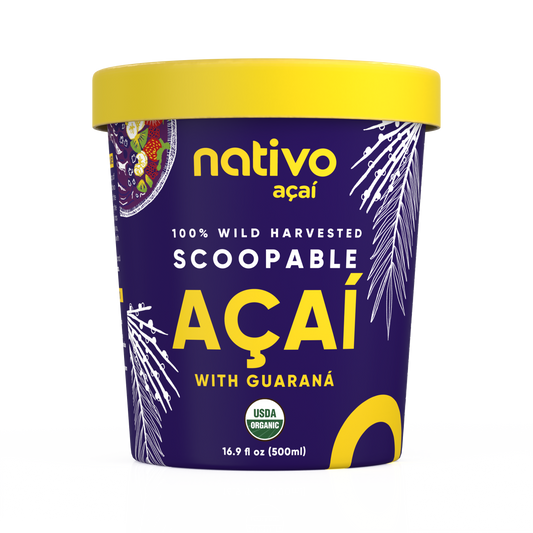
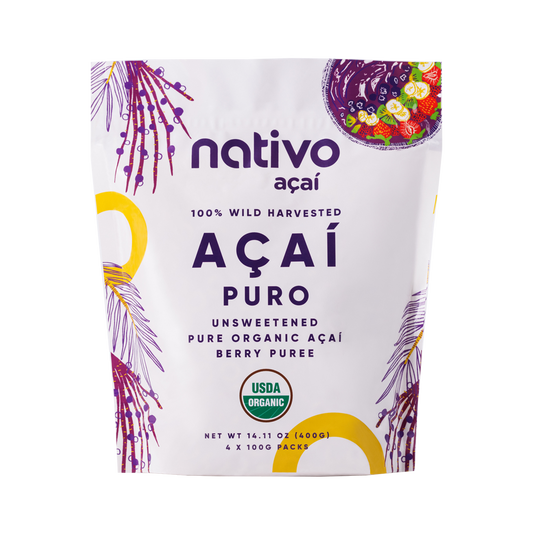
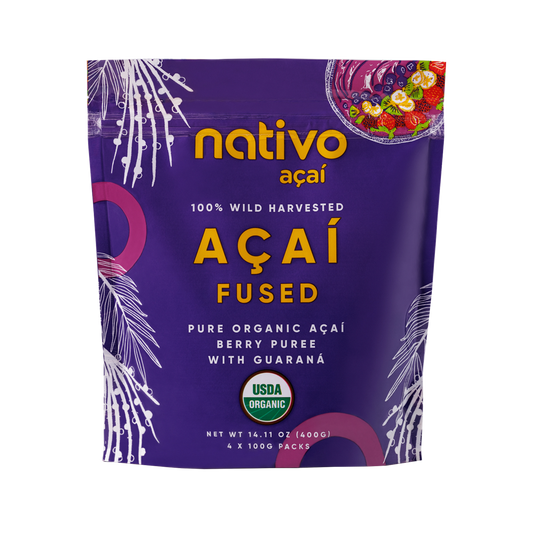
At Nativo Açaí, we believe you deserve clear, honest answers. This is why we do not use CMC in our açaí recipe and why we think you should know which brands do.
What Is Carboxymethylcellulose (CMC)?
Carboxymethylcellulose, often listed on ingredient labels as “CMC” or “cellulose gum,” is a synthetic, chemically modified version of cellulose, the structural fiber found in plants. Food manufacturers use it as:
· A thickener to make liquids feel creamier
· An emulsifier to keep ingredients from separating
· A stabilizer to extend shelf life and improve texture over time
You’ll find CMC in a wide variety of processed foods, including:
· Some plant-based milks and creamers
· Certain ice creams and frozen desserts
· Sauces, dressings, and gravies
· Low-fat or “diet” products that need extra body
· Some açaí products and smoothie bases
On paper, it looks like a win for manufacturers: cheap, functional, and approved for use in foods by regulatory agencies in many countries. But that’s not the whole story.
Why Are People Worried About CMC?
CMC isn’t new. What’s new is the research looking more closely at how it interacts with our gut microbiome and intestinal lining. For a long time, many additives were considered “safe” simply because they didn’t cause immediate toxicity at high doses. Now, scientists are asking a deeper question: how do these additives affect the delicate ecosystem of bacteria and mucus that protects our gut over years and decades?
Recent studies (especially in animals and small human trials) have raised several concerns:
1. Gut microbiome disruption
Research has shown that CMC can alter the composition of gut bacteria, reducing beneficial species and changing the balance of microbial metabolites that support a healthy intestinal environment.
2. Changes to the mucus layer
The mucus layer in the intestine is a protective barrier that keeps bacteria at a safe distance from the gut wall. Some controlled feeding studies suggest that consuming CMC may allow bacteria to move closer to this lining in certain people. That closer contact is associated, in other contexts, with chronic low-grade inflammation.
3. Inflammation and colon cancer risk (in animal models)
In mouse studies, diets containing emulsifiers like CMC have been shown to promote low-grade intestinal inflammation and, in models already primed for disease, to increase colon tumor formation. These models don’t prove what happens in everyday human life, but they raise valid concerns—especially when consumption is chronic, and the additive is widespread across many processed foods.
4. It’s not an essential ingredient
Perhaps the most important point from a consumer standpoint: CMC is not needed for nutrition or flavor. It’s there to make processing easier, textures smoother, and shelf life longer. If there’s credible concern and no real benefit to your health, many people reasonably choose to minimize exposure.
To be clear, current evidence does not definitively prove that CMC causes colon cancer in humans. The strongest data come from animal studies and short-term human trials that show worrisome patterns—microbiome disruption, mucus thinning, mild gut complaints—rather than full-blown disease. But when we design food products at Nativo Açaí, we ask a simple question: “If there’s doubt and no nutritional upside, why include it at all?”
How CMC Sneaks Into Your Açaí Bowl
If you’re reading this, you probably love açaí bowls (we do too). The problem is that not all açaí is created equal. Many consumers assume that if something is labeled “açaí,” it’s just berries and maybe some sugar. In reality, some açaí bases and blends are heavily formulated products.
Here’s how CMC can end up in your bowl:
· Some brands use CMC to make the açaí base thicker and more “scoopable” straight from the freezer.
· Others may use it to stabilize blends that include plant-based milks, juices, or other ingredients, preventing separation and ice crystals.
· CMC can also help manufacturers cut costs by allowing them to use less fruit while maintaining a rich texture.
On an ingredient label, you might see:
· Carboxymethylcellulose
· Cellulose gum
If you spot either of those on an açaí product, you’re looking at a formulation that uses this additive to enhance texture and stability—not a pure açaí experience.
Nativo Açaí’s Commitment: No CMC, No Cellulose Gum
We built Nativo Açaí around a simple principle: keep the product as close as possible to what nature intended. That means:
· No carboxymethylcellulose (CMC)
· No cellulose gum
· No reliance on synthetic emulsifiers to “fix” texture or extend shelf life
Why did we make that choice?
1. We prioritize gut health
With emerging science indicating that CMC can interfere with the gut microbiome and potentially contribute to an inflammatory environment, we prefer to stay on the cautious side. You’re not just eating for today’s energy—you’re eating for the long-term health of your digestive system.
2. We want the fruit to speak for itself
Açaí is naturally creamy when processed and blended correctly. We rely on quality sourcing, proper processing, and balanced formulation—not chemical shortcuts—to deliver a thick, satisfying bowl.
3. Transparency builds trust
We don’t want you to guess what’s in your bowl or be surprised that a “healthy” product depends on industrial additives to feel good in your mouth. If we wouldn’t proudly explain an ingredient and why it’s there, it doesn’t belong in our recipe.
How to Check If Your Açaí Contains CMC
Even if you’re not eating Nativo Açaí every time, we still want you to feel empowered as a consumer. Here’s how to quickly evaluate the açaí you’re ordering or buying:
1. Read the label
When you buy a frozen açaí pack or açaí base at the store, look at the ingredient list. Scan for:
o Carboxymethylcellulose
o E466 (CMC)
o Cellulose gum
If you see either, you’re looking at a product that uses CMC.
2. Ask at cafés and juice bars
Most açaí bowls are prepared using pre-made bases from specific suppliers. You can ask:
o “Which brand of açaí base do you use?”
o “Do you know if your base contains CMC or cellulose gum?”
Responsible shops should either know or be willing to check.
3. Look for short, simple ingredient lists
A high-quality açaí base doesn’t need a long list of additives. Ideally, you’ll see ingredients like:
o Açaí
o Maybe a bit of other fruit
o Possibly a sweetener (if you choose sweetened)
4. When the list starts to include gums, stabilizers, artificial flavors, and unfamiliar chemical names, you’re moving away from a whole-food product.
5. Watch for red flags in texture
Texture alone won’t tell you the full story, but if something feels unusually “gel-like,” super glossy, or doesn’t melt naturally at room temperature, it may be heavily stabilized.
Why This Matters for the Plant-Based Movement
Plant-based eating has exploded in popularity, and a lot of that is for good reason: more fruits, vegetables, legumes, and whole grains can be incredibly beneficial for health and the planet. But there’s a hidden trap: “plant-based” doesn’t automatically mean “minimally processed” or “great for your gut.”
Many plant-based milks, creamers, yogurts, and desserts are built on a backbone of additives like:
· Gums (xanthan, guar, locust bean)
· Emulsifiers (CMC, polysorbates, mono- and diglycerides)
· Stabilizers and texturizers
While not all additives are equal, and each one has its own safety profile, CMC stands out because of the specific research linking it to microbiome disruption and inflammatory patterns in experimental models.
If you’re moving toward plant-based eating for health reasons, it’s worth taking that extra step: don’t just ask “Is it vegan?”—ask “How processed is it?” and “What else is in there?”
How Nativo Açaí Fits Into a Cleaner, Gut-Friendly Lifestyle
Choosing Nativo Açaí is one small but meaningful way to align your daily choices with your long-term health goals:
· You’re getting real açaí, not a lab-engineered texture.
· You’re avoiding CMC and cellulose gum in your açaí base.
· You’re supporting a cleaner-label approach that respects the growing body of research on gut health and food additives.
Pair that with mindful toppings—like fresh fruit, nuts, seeds, and minimally sweetened granola—and you’ve got a bowl that supports your body instead of confusing it.
If this topic resonates with you, here are a few simple actions:
· Check the ingredient lists on the açaí products in your freezer.
· Next time you order an açaí bowl, ask which base they use.
· Choose brands and cafés that can answer your questions and are transparent about additives.
· When you see Nativo Açaí, know that the base in your bowl is free from CMC and cellulose gum by design.
At Nativo Açaí, our goal isn’t to scare you—it’s to empower you. You deserve to know what’s in your food, what’s being debated in the scientific community, and where your favorite brands stand on those issues.
We’ve made our choice: no CMC, no cellulose gum, and no shortcuts when it comes to your bowl. Now the choice is yours.