
When people think of açaí, Sambazon is often the first brand that comes to mind, thanks to its early role in bringing frozen açaí packs and smoothie bases to the global market. Today, however, the açaí category has matured, and buyers are paying closer attention to ingredient lists, sourcing, product quality, and flexibility—not just brand name recognition.
For cafés, smoothie bars, restaurants, and families at home who want authentic Brazilian açaí with clean ingredients and better flavor, Nativo Açaí has become a compelling alternative.
Introducing Nativo Açaí
Nativo Açaí is built around a simple idea: keep açaí as pure and true to its origin as possible while offering formats that work for both food service and home kitchens. Instead of expanding into a wide range of unrelated beverages and snacks, Nativo focuses on açaí pulp, bases, and sorbets.
Key pillars of Nativo Açaí include:
- Sourcing directly from the richest açaí-growing region of the Amazon Rainforest in Pará, Brazil.
- Wild-harvested fruit from native family cooperatives who live along the river and benefit directly from the açaí economy.
- Emphasis on authenticity, simple ingredient decks, and real nutritional value rather than marketing additives.
- Scalable options for both food service and retail.
By intentionally staying smaller and more specialized, Nativo can prioritize consistency in flavor, texture, and supply—priorities that are often more important to restaurants and distributors than a big national logo.
Nativo Açaí Product Range
Nativo’s product line is designed to serve a range of use cases, from high-volume smoothie bars to home smoothie makers. Although specific SKUs may vary, the core range typically includes:
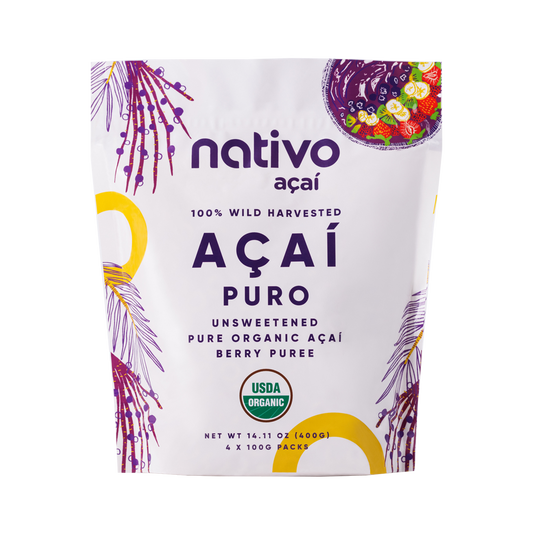
- Pure, unsweetened açaí pulp with no additives or preservatives
- Lightly sweetened or blended açaí bases for speed and consistency
- Food service packs for batch preparation
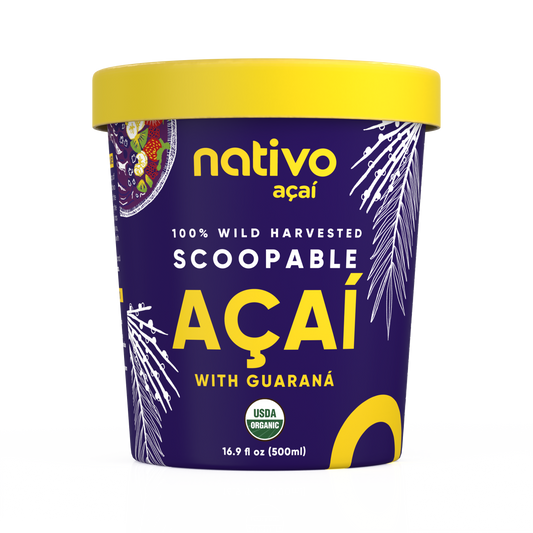
- Retail-ready smoothie packs and scoopable açaí sorbet
The unsweetened pulp is ideal for customers who want full control over their recipes, allowing them to customize sweetness, texture, and toppings. The blended formats are perfect for operations where speed, portion control, and consistency are essential during busy service hours.
Across the line, Nativo maintains transparency in labeling, avoiding artificial flavors, artificial colors, and high levels of added sugars, which aligns with how modern consumers read and evaluate product labels.
What Makes Açaí Nutritionally Unique?
Açaí stands out from many other fruits because of its balance of fiber, plant-based fats, and antioxidants rather than just sugar content. Its deep purple color comes from anthocyanins—a class of antioxidants also found in berries and grapes.
Typical characteristics of açaí pulp include:
- Dietary fiber
- Monounsaturated and polyunsaturated fats
- Anthocyanins and polyphenols
- Trace minerals such as potassium
Unlike fruit juices driven by sweetness, unsweetened açaí pulp is more subtle and often described as earthy or slightly bitter, making it better suited as a base ingredient than as a standalone dessert. This is why it works so well in bowls and smoothies, where you control the sweetness through fruits, toppings, or natural sweeteners.
Açaí as a Modern Breakfast
Breakfast habits have shifted toward options that feel nourishing, customizable, and convenient. Açaí bowls fit this pattern because they allow multiple food groups—fruit, healthy fats, fiber, and protein-rich toppings—in one colorful, satisfying dish.
From a compositional perspective, a typical açaí bowl might include:
|
Component |
Functional role |
|
Açaí pulp |
Base texture and antioxidant source |
|
Banana or berries |
Natural sweetness |
|
Nut butter |
Added fats, creaminess, and satiety |
|
Granola or seeds |
Crunch, fiber, and slow-digesting carbs |
The result is more like a blended meal than a low-calorie snack, which is why choosing a cleaner, more authentic açaí base like Nativo’s can make a real difference in how the bowl fits into your overall menu or diet.
The Story Behind Nativo Açaí
Nativo’s identity begins in the floodplain regions of the Amazon basin, where açaí grows on tall palm trees, and harvesting is still largely manual. Because the fruit oxidizes quickly after picking, the speed between harvest and pulping is critical for preserving color, flavor, and nutritional quality.
Nativo emphasizes:
- Long-term, responsible sourcing partnerships with native cooperatives
- Rapid pulping and freezing near the harvest sites to lock in freshness
- Traceability across supply stages
In the açaí market, suppliers that invest in localized processing and shorter timelines typically deliver better texture and more vibrant color, which is exactly what chefs and consumers notice in their bowls and smoothies.
Why People Look for Alternatives to Sambazon
Sambazon remains the most recognizable brand in the global açaí market and played a major role in introducing açaí to consumers worldwide. As the category has matured, however, more buyers are looking beyond the first brand they discovered and toward options that are less processed, more transparent, and closer to the traditional Brazilian experience.
Seeking alternatives does not mean Sambazon has disappeared from the market; it simply means that educated consumers now want:
- Shorter ingredient lists
- Cleaner labels
- Stronger ties to origin and communities
- More control over sugar levels and flavor
This is where Nativo Açaí positions itself: not as a massive conglomerate, but as a focused, authenticity-driven brand.
Ingredient Comparison: Sambazon vs. Nativo Açaí (Unsweetened)
For shoppers who read the back of the package, the difference between Sambazon’s unsweetened açaí and Nativo Puro Açaí is straightforward.
- Nativo Puro Açaí: just açaí pulp, with no lecithins and no preservatives.
- Sambazon unsweetened varieties: açaí pulp plus sunflower lecithin and citric acid.
If your priority is the purest possible açaí base, with no added emulsifiers or preservatives, Nativo Puro Açaí is the better-aligned choice.
Sambazon vs. Nativo Açaí Sorbet
The differences continue when you compare sorbets. Sambazon uses vegetable juice for color in its sorbet, while Nativo uses organic clarified açaí juice, which not only adds color but also contributes to antioxidant content.
Nativo’s formulation also results in approximately 30 fewer calories per serving than Sambazon sorbet, which can be meaningful for both calorie-conscious consumers and businesses looking to promote lighter dessert options.
Structural Differences: Big Brand vs. Focused Brand
|
Factor |
Large established brand (e.g., Sambazon) |
Focused specialist brand (Nativo Açaí) |
|
Brand recognition |
High |
Growing, niche-focused |
|
Product portfolio |
Broad and diversified |
Specialized in açaí |
|
Private label flexibility |
Often limited |
Often more flexible |
|
Pricing structure |
Standardized |
More adaptable by volume |
|
Ingredient customization |
Format dependent |
Frequently more adaptable |
When operators compare Sambazon and Nativo, they often look at how each brand fits into their business model, not just what the packaging looks like.These distinctions vary by region and distribution partner, but they reflect the types of questions cafés, juice bars, and retailers are asking before locking in a single supplier.
Market Maturity and Why Choice Matters
In any maturing category, early adopters initially care about basic availability, while later adopters begin to focus on quality control, ingredient sourcing, and vendor relationships. The açaí market is now firmly in this second phase.
Café chains, smoothie concepts, meal prep services, and grocery brands face different cost structures and menu strategies, and a one-size-fits-all vendor may not be ideal. Nativo’s niche as an açaí specialist—focused on clean pulp and straightforward formulations—fits buyers who want more control and differentiation.
Unique Recipes Using Nativo Açaí
1. Açaí Almond Parfait with Warm Blueberry Compote
This recipe highlights contrast: cold, dense açaí layered with warm, bright blueberries and creamy yogurt.
Ingredients:
- 2 packs Nativo Puro Açaí
- 1/2 cup frozen blueberries
- 1 tablespoon maple syrup
- 1/4 teaspoon lemon zest
- 1/2 cup plain Greek yogurt
- 2 tablespoons toasted sliced almonds
- 1 tablespoon hemp seeds
Method:
Gently heat the blueberries with maple syrup over low heat until they release juices and slightly thicken, then stir in lemon zest and let them cool just enough so they are warm, not hot. Blend Nativo Puro Açaí until smooth and thick. In a glass, layer açaí, yogurt, and warm blueberry compote, repeating as desired, and finish with toasted almonds and hemp seeds for crunch and added nutrition.
The açaí provides structure while the compote adds brightness and natural sweetness without becoming overly sugary.
2. Savory Açaí Citrus Bowl with Seed Crunch
This format leans into açaí’s earthy profile and shows that it doesn’t have to be dessert-like to be satisfying.
Ingredients:
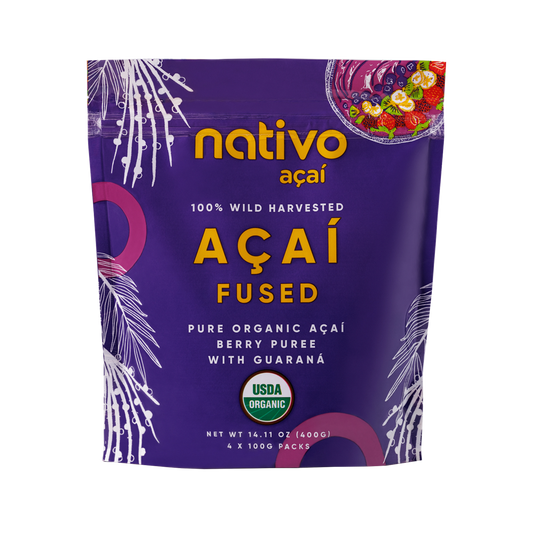
- 2 packs Nativo Fused Açaí
- 1/4 avocado
- 1/4 cup cucumber, finely diced
- 1 tablespoon lime juice
- Pinch of sea salt
- 1 tablespoon pumpkin seeds
- 1 tablespoon sunflower seeds
- A few fresh mint leaves
Method:
Blend Nativo Fused Açaí with avocado, lime juice, and a pinch of sea salt until smooth and thick. Transfer to a shallow bowl, then top with diced cucumber, pumpkin seeds, sunflower seeds, and torn mint leaves.
The citrus sharpens the flavor, the seeds add crunch, and the result behaves more like a composed dish than a sweet smoothie bowl.
FAQs
1. Is Nativo Açaí sweetened?
Nativo Açaí comes in both unsweetened and lightly blended options; the Puro line contains only açaí pulp, while other products may include natural sweeteners depending on the specific item.
2. How is açaí different from other berries in texture?
Açaí is typically sold as frozen pulp rather than whole fruit, and when blended it becomes thick and creamy without the skin texture you expect from berries like blueberries or raspberries.
3. Can Nativo Açaí be used in food service environments?
Yes, Nativo comes in frozen packs that are ideal for smoothie bars, cafés, juice concepts, and other food service operations that need consistent results and an easy blending process.
4. Does açaí contain natural sugar?
Açaí itself is naturally low in sugar compared to many fruits; the sweetness in most açaí bowls or drinks comes from added fruits, juices, or sweeteners.
5. How should Nativo Açaí be stored?
Nativo Açaí should be kept frozen until ready to use, and once thawed, it is best consumed right away for optimal quality.
Final Thoughts: Is Nativo Açaí the Best Alternative to Sambazon?
Sambazon still holds a strong position as an early leader in the açaí category, with significant distribution and name recognition. At the same time, the growing interest in cleaner labels, authentic sourcing, and flavor control has opened the door for more specialized brands.
Nativo Açaí offers a focused alternative for consumers and businesses who care about pure ingredients, consistent pulp quality, and flexible formats that adapt to their recipes rather than dictate them. The movement toward brands like Nativo is less about dissatisfaction with big brands and more about the market finally offering better, more targeted choices for those who want a truly Brazilian açaí experience.
|
Buyer priority |
Sambazon (large legacy brand) |
Nativo Açaí (specialist Sambazon alternative) |
|
Brand recognition |
Very high in mainstream retail and global markets 4-Blogs.docx |
Emerging, niche-focused but growing with specialty cafés and retailers |
|
Ingredient list – unsweetened pulp |
Açaí plus sunflower lecithin and citric acid 4-Blogs.docx |
100% açaí pulp, no lecithins, no preservatives |
|
Sorbet formulation |
Uses vegetable juice for color; higher calories per serving 4-Blogs.docx |
Uses organic clarified açaí juice for color and antioxidants; ~30 fewer calories per serving |
|
Authentic Brazilian sourcing |
Established Amazon presence, but less transparent positioning in this article 4-Blogs.docx |
Direct from Pará, Brazil; wild‑harvested by native family cooperatives |
|
Focus of product line |
Broad portfolio of beverages and açaí-based items 4-Blogs.docx |
Specializes in açaí pulp, bases, and sorbets only |
|
Clean-label positioning |
More processed, additional functional ingredients 4-Blogs.docx |
Short, simple labels aligned with clean‑label expectations |
|
Control over sugar and flavor |
More pre-defined flavor systems in some formats 4-Blogs.docx |
Unsweetened and lightly blended options designed for full recipe control |
|
Fit for food service (cafés, bars) |
Standardized programs, less flexible by operator 4-Blogs.docx |
Flexible formats, strong fit for operators that want differentiation |
|
Private label / customization |
Often limited, depending on distributor 4-Blogs.docx |
Often more open to private label and custom solutions |
|
Best for buyers who want… |
Maximum name recognition and shelf familiarity 4-Blogs.docx |
The best Sambazon alternative for pure, authentic, higher‑quality açaí |