
In recent years, food habits have shifted away from broad categories such as “healthy” and toward more defined patterns. Grain-free, gluten-free, plant-based, low-sugar. Each approach draws its own boundaries, yet most share a preference for minimally processed, structurally intact foods. Within that landscape, both acai and blueberry appear frequently.
Acai, harvested from palm trees in the Amazon, rarely travels as a whole fruit. It is pulped and frozen shortly after collection. Blueberries, grown across temperate regions, are distributed fresh or frozen with little alteration. Their paths differ. Their use overlaps.
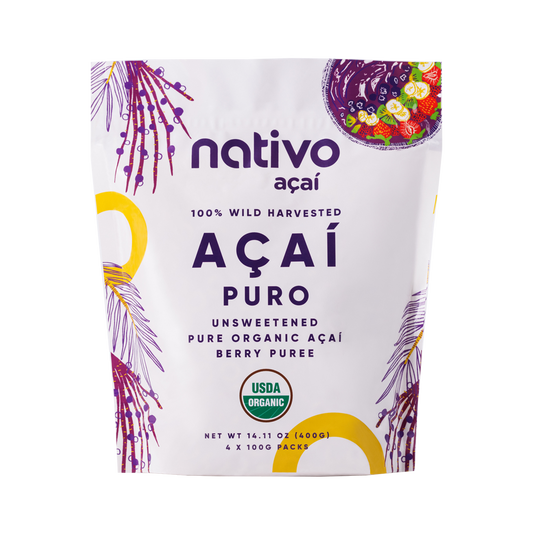
Products such as Nativo Puro Açaí remain close to the original pulp, without added sweeteners. In that form, acai settles easily into several dietary frameworks, much as blueberries have done for decades.
Popular Eating Patterns and Where Each Berry Sits
Diet trends tend to cycle, but certain patterns persist because they align with how people feel after eating. Grain-free, gluten-free, keto, vegan, and paleo are among the more established approaches. Acai and blueberry occupy different positions within each.
1. Grain-Free Diets
Grain-free plans remove wheat, rice, oats, and related cereals. Blueberries fit without adjustment, as they are simply fruit. Acai, in pure pulp form, does the same. A bowl made from Nativo Puro Açaí topped with nuts and seeds contains no grain components unless they are added separately. The base itself remains outside the grain category.
2. Gluten-Free Diets
Gluten is a protein present in wheat, rye, and barley. Blueberries contain none. Acai contains none. Neither requires reformulation to follow gluten-free standards. The distinction lies in processing. Many packaged gluten-free foods rely on starch blends. Frozen acai pulp and whole blueberries do not.
3. Keto Diets
Keto patterns restrict carbohydrates and emphasize fats. Blueberries contain moderate natural sugars and are typically consumed in smaller portions under keto guidelines. Acai pulp, particularly in unsweetened formats such as Nativo Puro Açaí, has lower sugar content than many fruits and contains plant lipids. When blended with nut butters or coconut milk, it forms a mixture that aligns more closely with high-fat frameworks.
4. Vegan Diets
Both berries are plant-derived and fit vegan parameters without modification. Blueberries often appear in baked goods and cereals. Acai is more often used as the base for bowls and smoothies. In vegan contexts, the difference is structural rather than ethical.
5. Paleo Diets
Paleo frameworks emphasize whole foods and limit refined ingredients. Fresh blueberries comply without question. Acai pulp, when unsweetened and minimally processed, also aligns with those principles. Nativo Puro Açaí remains a single-ingredient pulp, which places it within that boundary.
Across these patterns, neither berry appears out of place. Their roles vary, but their inclusion is uncomplicated.
Nutritional Character and Functional Difference
Blueberries are composed largely of water, natural sugars, fiber, vitamin C, vitamin K, and manganese. Their anthocyanin content is concentrated in the skin. The fruit is light in texture and disperses easily when mixed into other foods.
Acai pulp contains fiber, polyphenols, and measurable levels of oleic and linoleic fatty acids. The lipid presence changes how it behaves in the body and in preparation. It produces a thicker matrix when blended and holds a darker, more uniform pigment throughout.
The comparison is not hierarchical. It is compositional. Blueberries behave as a fruit carbohydrate with pigment. Acai behaves as a fruit pulp with suspended fats and fiber.
Beyond the Label of Gluten-Free
Removing gluten from a diet often focuses attention on the absence. The question becomes what is excluded. In many commercial products, gluten removal is often replaced with refined starches or sugars. The end result meets regulatory criteria but may not alter overall nutrient density.
Acai does not require reformulation to meet gluten-free standards. It contains no gluten in its natural state. Blueberries share this quality. The distinction lies in what accompanies them. A bowl based on Nativo Puro Açaí remains dense and fiber-rich before toppings are added. A serving of fresh blueberries remains intact and unmodified.
The fruit itself does not shift to accommodate the label. The label simply acknowledges what is already true.
Nutrient Concentration and Antioxidant Expression
Both acai and blueberry are cited for antioxidant content. Laboratory assays often record high polyphenol values in acai pulp, particularly anthocyanins. Blueberries also contain significant anthocyanin levels, though distribution differs. In blueberries, pigment is strongest in the skin and lighter in the flesh. In acai pulp, the color is uniform.
The visual density of acai reflects that distribution. The pulp appears nearly black. Blueberries appear deep blue with a pale interior. During blending or heating, blueberry pigment diffuses into surrounding liquid. Acai retains a darker, cohesive tone.
Antioxidant measurement in isolation does not define dietary outcome. It describes potential chemical activity. Both fruits contribute polyphenols within the context of an overall diet.
Texture, Stability, and Use
Blueberries maintain shape when fresh. When frozen and thawed, they soften and release juice. In baking, they burst and spread color through batter.
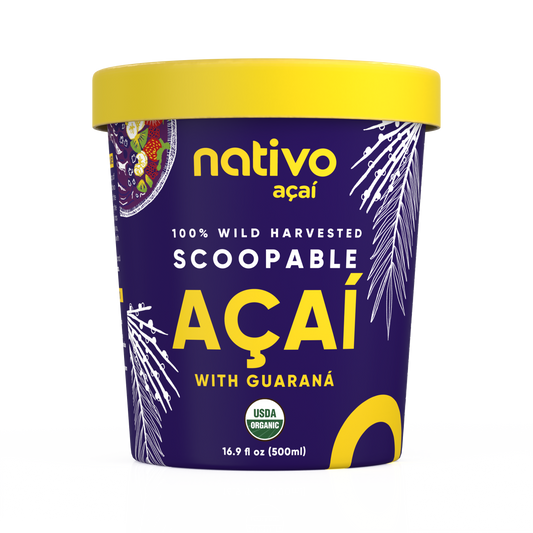
Acai pulp, stored frozen, thaws into a thick suspension. When blended, it forms a stable base that supports added ingredients. Granola, seeds, or sliced fruit rest on the surface rather than sinking immediately. This property is evident in preparations made with Nativo Puro Açaí or Nativo Scoopable Açaí. The structure holds at serving temperature for a limited but workable interval.
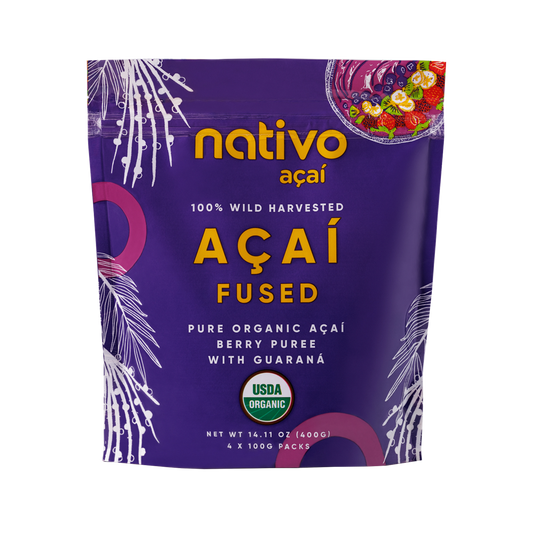
Nativo Fused Açaí, which includes guarana syrup, shifts sweetness upward while maintaining density. The underlying pulp remains the primary structural element.
Blueberries rarely serve as a base. Acai rarely appears whole. Their culinary positions differ accordingly.
Common Misunderstandings Around Gluten-Free Eating
Some believe removing gluten automatically improves nutritional quality. Others treat gluten avoidance as universally necessary. In practice, only individuals with celiac disease or gluten sensitivity require strict exclusion. For others, the effect depends on what replaces gluten-containing foods.
Several patterns appear repeatedly:
- No gluten equals healthier.
- Processed gluten-free products may still contain refined starches and sugars.
- Everyone benefits from removing gluten.
- For many individuals, gluten poses no issue.
- Gluten-free means low carbohydrate.
- Many gluten-free items rely heavily on carbohydrate substitutes.
Within this context, fruits like acai and blueberry remain uncomplicated. They do not require substitution. They are naturally gluten free without reformulation.
Why Nativo Puro Açaí Remains Compatible
For individuals following gluten-free or grain-free frameworks, ingredient simplicity reduces uncertainty. Nativo Puro Açaí contains only acai pulp. There are no wheat-derived thickeners or hidden starches. The frozen format limits oxidation and preserves the fruit's original composition.
Compared with many packaged alternatives marketed under gluten-free labeling, a single-ingredient pulp stands apart in structure. It is neither reformulated nor fortified to compensate for removal of a component. It remains what it began as.
Blueberries, in their whole form, share that transparency. The distinction lies in how each is typically used. Acai appears as a base ingredient. Blueberries appear as additions.
Practical Integration
In daily meals, integration tends to be straightforward rather than elaborate.
An acai bowl made from Nativo Puro Açaí blended with almond milk forms a dense foundation. Fresh blueberries scattered across the surface introduce sweetness and contrast. The combination remains grain-free and gluten-free unless additional components alter it.
In smoothie form, adding blueberries to acai pulp lightens flavor without thinning the mixture excessively. The acai determines the body. The blueberries determine brightness.
Frozen acai can also be portioned into smaller servings and blended with plant-based yogurt. Blueberries may be folded in whole. The two fruits coexist without competing for function.
Recipes
1. Acai and Blueberry Bowl
This bowl reflects the structural contrast between the two fruits. The acai forms the base. The blueberries remain intact on the surface.
Ingredients
- 2 packs of Nativo Puro Açaí (200g)
- 1 frozen banana
- 1/3 cup almond milk
- 1/2 cup fresh blueberries
- 1 tablespoon almond butter
- A small handful of pumpkin seeds
Method
Blend the Nativo Puro Açaí with banana and almond milk until thick. The texture should remain spoonable rather than pourable. Transfer to a bowl. Arrange blueberries over the surface. Add almond butter and pumpkin seeds. The acai holds the toppings without rapid sinking. Blueberries provide sweetness against the darker base.
2. Dark Berry Smoothie with Acai
This preparation leans toward drinkable consistency while retaining density from the pulp.
Ingredients
- 2 packs of Nativo Fused Açaí (200g)
- 1/2 cup frozen blueberries
- 1 cup unsweetened coconut milk
- 1 tablespoon chia seeds
Method
Blend all ingredients until smooth. The Nativo Fused Açaí contributes body and mild sweetness. Blueberries brighten the flavor profile. Chia seeds thicken slightly as the smoothie rests. The result remains darker and heavier than a typical fruit smoothie.
FAQs
1. Is Nativo Puro Açaí naturally gluten-free?
Yes. Pure acai pulp contains no gluten. Nativo Puro Açaí is a single-ingredient product with no wheat-based additives.
2. How does acai differ nutritionally from blueberries?
Blueberries are primarily carbohydrate-based with vitamin C and fiber. Acai pulp contains fiber with plant fats and polyphenols. The composition leads to differences in texture and satiety.
3. Can acai and blueberries be used together in the same recipe?
They are often combined. Acai forms a dense base in bowls or smoothies, while blueberries contribute sweetness and lighter texture.
4. Does acai need sweetening before use?
Unsweetened acai has a restrained, slightly bitter flavor. Sweetening depends on preference. Products such as Nativo Fused Açaí include guarana syrup for sweetness, while Puro Açaí remains unsweetened with zero sugar.
5. How should frozen acai be stored and handled?
It should remain frozen until use. Once thawed, it is best consumed promptly to maintain texture and color stability.
Closing Observations
Acai and blueberry share color, polyphenols, and broad compatibility with modern dietary patterns. Beyond that, they diverge in structure and behavior.
Blueberry remains light, water-rich, and naturally sweet. Acai remains dense, lipid-bearing, and structurally cohesive. Within gluten-free, grain-free, vegan, keto, or paleo frameworks, both sit comfortably. Their differences do not create conflict. They create variation.
Nativo Açaí products reflect the fruit's inherent qualities. The pulp holds its form, pigment, and fiber. Blueberries, when paired alongside, provide contrast and lift. Neither fruit defines a diet trend. They simply remain consistent within it.